In the hushed galleries of a museum, the gentle chime of stacked bracelets might seem out of place, but in the world of personal adornment, it is a language all its own. The art of stacking bracelets is not merely a visual pursuit; it is an auditory experience, a symphony played on the wrist. This is the realm of sonic aesthetics, where the choice of materials and their deliberate combination creates a unique and personal soundscape. It is a practice as old as adornment itself, yet it continues to evolve with modern tastes and materials.
The foundational principle of this acoustic art is vibration. When two hard surfaces meet, they create a sound wave. The pitch, timbre, and volume of that sound are dictated by the physical properties of the materials involved. Density, hardness, and internal structure are the invisible conductors of this tiny orchestra. A dense, hard material like tungsten carbide will produce a high-pitched, sharp click or ping, reminiscent of fine china being delicately tapped. Softer, less dense metals like aluminum or certain gold alloys yield a duller, softer thud with less resonance. Understanding this basic physics is the first step toward composing your own wearable melody.
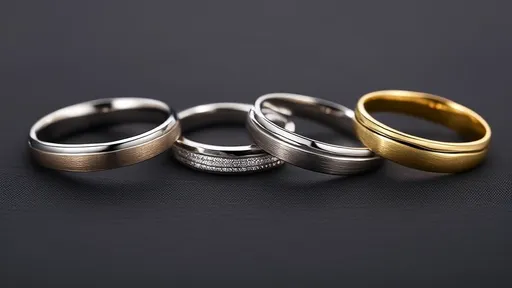
Metals are the virtuosos of the bracelet stack, each alloy singing a distinct note. The classic combination often begins with precious metals. Yellow, white, or rose gold bracelets, when stacked together, create a rich, warm, and surprisingly soft chorus of clinks. Their malleability and relative softness absorb some of the energy of impact, resulting in a muted, luxurious sound that is never jarring. Sterling silver, being slightly harder and more resonant than karat gold, offers a brighter, clearer tone. Its sound is more bell-like, a cheerful and light chime that carries well.
For a more dramatic and percussive element, one must consider alternative metals. Titanium and tungsten carbide are the modern additions to the palette. Titanium, despite its strength, is relatively light and can produce a medium-pitched, clean sound. Tungsten carbide, however, is in a league of its own. Its extreme hardness creates the highest, most defined click of any common jewelry material. It acts as a metronome in a stack, providing sharp, punctuated accents against the softer sounds of gold or silver. Mixing these metals creates a complex auditory texture, a conversation between warmth and cool precision.
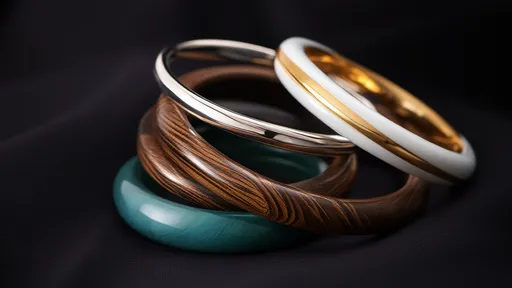
Yet, a symphony is not made of strings alone. Introducing non-metallic materials is where true compositional genius lies. Hardstones like jade, onyx, or lapis lazuli offer a profoundly different sonic character. When two stone bangles meet, the sound is a deep, solid, and almost wooden tok. It is a grounding, earthy sound that provides a bass note to the higher frequencies of metal. The porosity and crystalline structure of the stone deaden the vibration quickly, creating a short, decisive sound that contrasts beautifully with the ringing sustain of metals.
Organic materials introduce an element of quiet warmth. Wooden bangles are the quietest players, their soft, fibrous structure absorbing nearly all impact energy. Their sound is a faint, hushed whisper, a soft brushing sound that is felt more than heard. Leather cuffs or wraps add almost no percussive sound at all but contribute a subtle swish or creak from the material itself as it flexes, adding a layer of texture that is purely frictional rather than impact-based. These elements serve to soften the entire composition, preventing it from becoming too loud or cacophonous.
The maestro of this wearable orchestra is, without a doubt, the wearer. The final sound is not created in a vacuum; it is performed through movement. A gentle walk will cause the bracelets to sway and tap against each other softly, producing a slow, rhythmic cadence. A more animated gesture—waving a hand, typing fervently, or gesturing while speaking—composes a faster, more energetic movement. The sound becomes an extension of the wearer's personality and activity. A carefully curated stack can sound entirely different on two different people based solely on their mannerisms, making the acoustic result deeply personal and unique.
Beyond material and movement, the design of the bracelets themselves plays a crucial role. A solid, heavy curb chain will move and sound entirely different from a delicate, finely linked trace chain. The former will produce a deeper, weightier rustle and clunk, while the latter will create a much higher-pitched, almost shimmering cascade of tiny sounds. Bangle bracelets, with their rigid, circular form, create the most definitive and loudest impacts, as the entire structure vibrates uniformly. Cuff bracelets, which are open, often have a different impact point and can create a slightly off-key sound if they hit at the opening, a detail a savvy wearer might use for intentional dissonance.
Crafting the perfect sound requires intention and experimentation. It is not about simply piling on beautiful pieces; it is about curation and balance. One might start with a foundation of two or three gold bangles for a warm, base melody. A sterling silver piece could be added for a brighter, harmonic accent. Then, for a striking contrast, a single tungsten carbide bangle could be introduced to provide sharp, high-pitched rhythmic clicks. Finally, a wooden or leather bracelet could be placed intermittently to dampen the overall volume and add textural depth, preventing the sound from becoming overly metallic and sharp.
The pursuit of the perfect stack is a journey of listening. It encourages a heightened awareness of the sensory world we inhabit and create around ourselves. In a time of visual overload, the subtle music of carefully chosen bracelets offers a return to a more nuanced, multi-sensory experience of fashion. It is a hidden language, a secret song played on the wrist, a personal soundtrack that is both a form of self-expression and a private pleasure. It transforms jewelry from a static object into a dynamic performance, a reminder that beauty is not only seen but also heard.

By /Aug 27, 2025

By /Aug 27, 2025
By /Aug 27, 2025

By /Aug 27, 2025
By /Aug 27, 2025

By /Aug 27, 2025

By /Aug 27, 2025
By /Aug 27, 2025
By /Aug 27, 2025
By /Aug 27, 2025
By /Aug 27, 2025

By /Aug 27, 2025
By /Aug 27, 2025
By /Aug 27, 2025

By /Aug 27, 2025
By /Aug 27, 2025
By /Aug 27, 2025
By /Aug 27, 2025
By /Aug 27, 2025

By /Aug 27, 2025
