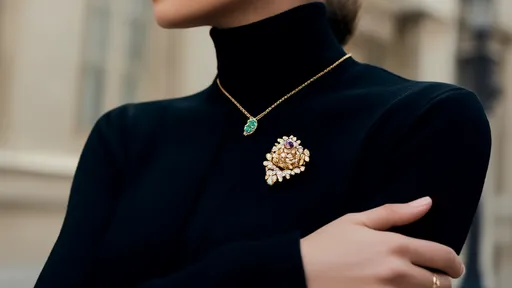
In the nuanced world of corporate attire, accessories often speak louder than words, and among them, the brooch stands as a subtle yet powerful emblem of professionalism and authority. Unlike more overt pieces of jewelry, a well-chosen brooch can convey competence, attention to detail, and a refined sense of leadership without uttering a single word. This silent declaration is an art form in itself, blending aesthetics with strategic messaging to enhance one's professional presence.
The history of brooches as markers of status and authority dates back centuries, from ancient fibulae used to fasten garments to the ornate pieces adorning royalty and military officials. In modern workplaces, this tradition evolves into a sophisticated tool for personal branding. A brooch, when selected with intention, does more than accessorize; it communicates. It signals that the wearer understands the unspoken codes of their environment and possesses the discernment to navigate them with elegance.
Choosing the right brooch for a professional setting requires a keen eye for balance and context. The design should be polished and understated, avoiding excessive flamboyance that might detract from one's message. Geometric shapes, such as clean lines or structured forms, often project an air of precision and reliability. Metals like silver, gold, or platinum in muted finishes convey timelessness and gravitas, while stones, if used, should be minimal and classic—think pearls, small diamonds, or dark gemstones like sapphires.
Placement is equally critical. A brooch worn near the lapel of a blazer or at the collar of a blouse draws the eye upward, emphasizing the face and, by extension, the wearer's expressions and engagement. This positioning subtly reinforces authority by aligning the accessory with traditional symbols of leadership, such as lapel pins in diplomatic or corporate ceremonies. It creates a focal point that commands respect without overwhelming the overall attire.
Color psychology plays a pivotal role in the silent language of brooches. Neutral tones and metallic shades are synonymous with professionalism, evoking stability and trust. A gold brooch might suggest warmth and approachability, while silver or steel tones can imply cool efficiency and modernity. Occasionally, a touch of color—deep blue or burgundy, for instance—can introduce elements of creativity or confidence, but it should be used sparingly to maintain a composed image.
The material and craftsmanship of a brooch also contribute to its narrative. High-quality materials not only endure daily wear but also reflect a commitment to excellence. Handcrafted pieces or those from reputable designers can signal an appreciation for artistry and detail, traits highly valued in leadership roles. Conversely, cheap or overly trendy brooches might undermine the intended message, coming across as insincere or unprofessional.
In industries where authority is paramount, such as law, finance, or academia, brooches can serve as non-verbal cues of expertise and seniority. A partner at a law firm might choose a classic, diamond-studded brooch to underscore her tenure and precision, while a university dean could opt for a heritage piece to echo tradition and wisdom. In creative fields, a uniquely designed brooch might highlight innovation without sacrificing professionalism, bridging individuality with credibility.
Brooches also offer a versatile means of adapting to different professional scenarios. For a high-stakes presentation, a bold yet elegant piece can enhance presence and command attention. In daily operations, a smaller, more discreet brooch might reinforce consistency and reliability. This adaptability makes the brooch an invaluable tool for women—and increasingly, men—in leadership, allowing them to modulate their image with subtlety and grace.
Beyond aesthetics, the brooch carries symbolic weight. It can represent achievements, affiliations, or personal values. For example, a brooch featuring a motif related to one's industry—a scale for justice, a book for education—can reinforce professional identity. Similarly, heirloom pieces might convey a sense of legacy and continuity, connecting personal history with professional stature.
Caring for and maintaining brooches is part of their narrative. A well-kept accessory suggests discipline and respect for one's tools, mirroring how one might manage responsibilities. Regular cleaning, proper storage, and occasional professional upkeep ensure that the brooch remains a testament to the wearer's dedication to excellence, rather than a neglected afterthought.
In global business contexts, the interpretation of brooches can vary, making cultural awareness essential. In some cultures, certain symbols or colors might carry specific connotations that could enhance or hinder communication. Researching and respecting these nuances demonstrates cultural intelligence, a trait increasingly crucial in authoritative roles within multinational environments.
Ultimately, the brooch as a silent manifesto in the workplace is about intentionality. It is not merely decorative but deliberative, each choice reflecting a deeper understanding of how appearance influences perception. In a world where first impressions and non-verbal cues often precede spoken words, mastering this aspect of professional dress can be a significant advantage.
As workplaces continue to evolve, embracing both traditional and contemporary elements, the brooch remains a timeless accessory for those wishing to articulate authority with sophistication. It bridges the personal and the professional, allowing individuals to express their unique strengths while adhering to the codes of their field. In the end, a carefully selected brooch does not just adorn the outfit—it adorns the career, adding a layer of polish that speaks volumes in silence.

By /Aug 27, 2025

By /Aug 27, 2025
By /Aug 27, 2025

By /Aug 27, 2025

By /Aug 27, 2025

By /Aug 27, 2025

By /Aug 27, 2025
By /Aug 27, 2025
By /Aug 27, 2025
By /Aug 27, 2025
By /Aug 27, 2025
By /Aug 27, 2025

By /Aug 27, 2025
By /Aug 27, 2025

By /Aug 27, 2025
By /Aug 27, 2025
By /Aug 27, 2025
By /Aug 27, 2025
By /Aug 27, 2025
By /Aug 27, 2025
