As the golden hour casts long shadows across the marble lobby, you check into your five-star hotel after an unforgettable day of exploring foreign markets and ancient alleyways. Among your souvenirs rests something far more precious—perhaps a family heirloom, an expensive watch, or a recently acquired piece of local jewelry. The front desk clerk hands you the keycard with a warm smile and casually mentions, "For your valuables, we recommend using the in-room safe." It’s a familiar suggestion, one that travelers have heard for decades. But as you slide the heavy door of that small metal box shut, a quiet question might linger in the back of your mind: How secure is this thing, really?
The in-room hotel safe is a symbol of security, a miniature fortress promising peace of mind. For millions of travelers each year, it is the default solution for protecting passports, cash, electronics, and of course, jewelry. Hotels promote them as a secure convenience, a feature as standard as the minibar or the complimentary shampoo. We use them almost instinctively, trusting that the combination we set or the key we are given forms an impenetrable barrier against theft. Yet, the actual security these safes provide is a complex and often misunderstood subject, sitting at the intersection of hospitality, security engineering, and criminal opportunism.
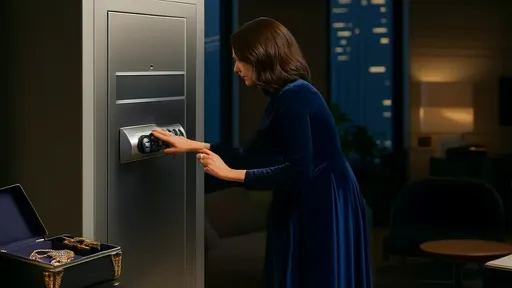
To understand their vulnerability, one must first understand their design. The vast majority of in-room hotel safes are not the massive, steel-reinforced, dual-lock monstrosities you might find in a bank vault. They are lightweight, mass-produced units designed for two primary purposes: deterring casual opportunism and providing insurance compliance. They are typically bolted to a shelf or closet to prevent someone from simply walking off with the entire unit. Their locks are electronic, often operated by a user-defined four-digit PIN code. This very convenience is a double-edged sword.
The most common point of failure is not the metal but the software. Many of these safes have a default override code—a master code known to hotel staff for situations where a guest forgets their combination or checks out without emptying the safe. The existence of this master code is a necessary feature for hotel operations, but it also represents a critical vulnerability. The security of your valuables, therefore, is only as strong as the protocol governing that master code. In a well-managed, reputable establishment, access to the master code is severely restricted to a handful of senior, vetted security personnel. The code might be stored in a physical safe itself and require dual authorization to access. In less scrupulous or poorly managed hotels, the code might be known by dozens of staff members, from housekeeping to front desk clerks, and could even be written down in an easily accessible logbook. The potential for internal theft is, unfortunately, a very real threat.
Beyond the human element, the technology itself can be shockingly basic. Some older models have been shown to have predictable or easily hackable software. There are known techniques, sometimes readily found online, for resetting or bypassing the electronic locks on certain common models. A determined thief with a modest amount of technical knowledge could potentially open one of these safes in minutes without leaving a trace of forced entry. This makes them effective against a snatch-and-grab thief but potentially useless against a more knowledgeable criminal who has specifically targeted your room.
Then there is the simple issue of force. While bolted down, these safes are not impervious to a physical attack. A powerful crowbar, a hammer, or even repeated, forceful blows can sometimes pry them open or damage the locking mechanism. This method is noisy and would likely attract attention, but in an empty room during the middle of the day when housekeeping is presumed to be present, it is not entirely impossible. The metal used is often thin, and the bolts, while sturdy, can be weakened or sheared with enough applied force.
So, where does this leave the traveling jewelry enthusiast? Abandoning the safe altogether is not the answer. It remains a significant deterrent against the most common type of hotel theft: the opportunistic crime. A maid letting her cousin into a room, a previous guest who kept a keycard, or a stranger who simply wanders in off the street will likely be stopped by the safe. It is a barrier that requires more time, tools, and knowledge than most casual thieves possess. The real risk comes from overestimating its protection and developing a false sense of security.
The first and most powerful layer of security is discretion. The safest jewelry is the jewelry that attracts no attention. Avoid flashing expensive pieces in hotel lobbies, restaurants, or bars. When not being worn, they should be out of sight. Do not leave them on the bathroom counter or nightstand, even for a moment. The simple act of making your valuables invisible removes the temptation for the vast majority of potential thieves.
When using the in-room safe, treat it as a tool, not a guarantee. Before storing anything inside, give it a quick inspection. Is it firmly bolted down? Does the door close flush with no wiggle? Does the electronic keypad seem responsive and modern, or old and worn? When setting your code, avoid obvious sequences like 1234, 0000, or your birth year. Use a unique code you haven't used elsewhere.
For the utmost protection, especially for items of exceptionally high monetary or sentimental value, the in-room safe should be considered merely the first line of defense. The most secure option a hotel offers is usually the safe deposit boxes located in the main vault behind the front desk. These are typically commercial-grade safes with much thicker steel, sophisticated locks, and 24/7 monitoring. Access is rigorously logged and requires staff supervision. While less convenient than an in-room safe, the security difference is monumental.
Another modern solution is to travel with your own security. Portable travel safes made of cut-resistant fabric and steel cable can be anchored to an immovable object in the room, like a large pipe in the closet or the frame of the heaviest bed. While not foolproof, they add another cumbersome layer a thief must defeat. For smaller items like rings or earrings, a diversion safe—an ordinary-looking object like a sunscreen bottle or a book with a hidden compartment—can be an effective way to hide valuables in plain sight amongst your other belongings.
Finally, never overlook the importance of insurance. Regardless of the precautions you take, theft is always a possibility. A dedicated jewelry insurance policy or a rider on your homeowner's policy that covers items while traveling is essential. Document your pieces with photographs and appraisals before your trip. In the unfortunate event of a loss, this will be far more valuable than any regret over not using the hotel safe. It transforms a catastrophic personal loss into a manageable financial claim.
The in-room hotel safe is a paradox. It is both secure and insecure, a deterrent and a vulnerability. Its true value lies not in being a perfect shield, but in being one component of a broader security strategy. It is perfectly adequate for protecting your passport, extra cash, and tablet from the majority of threats. But for the glittering treasures that hold both financial and emotional value, true security requires more thought. It demands layers: discretion to avoid attention, the in-room safe for basic deterrence, the front desk vault for maximum security, and insurance as the final safety net. The goal is not to make your items theft-proof—an impossible task—but to make them so difficult and risky to steal that a thief will simply move on to an easier target. In the end, the most important thing you secure on your travels is your peace of mind.
By /Aug 27, 2025

By /Aug 27, 2025
By /Aug 27, 2025

By /Aug 27, 2025

By /Aug 27, 2025
By /Aug 27, 2025

By /Aug 27, 2025
By /Aug 27, 2025

By /Aug 27, 2025
By /Aug 27, 2025
By /Aug 27, 2025

By /Aug 27, 2025

By /Aug 27, 2025
By /Aug 27, 2025

By /Aug 27, 2025
By /Aug 27, 2025
By /Aug 27, 2025
By /Aug 27, 2025
By /Aug 27, 2025
By /Aug 27, 2025
