In the vast digital marketplace where trends emerge and vanish with the swipe of a thumb, a peculiar new phenomenon has taken root: the live-streamed pearl hunt. Viewers from around the globe now tune in, not to watch gaming streams or cooking shows, but to witness the slow, suspenseful cracking open of oysters and mussels, each one a potential treasure chest hiding lustrous pearls. This practice, which blurs the lines between entertainment, consumerism, and the ancient jewelry trade, has sparked a fascinating debate. Is this merely a novel form of interactive leisure, or are we witnessing the birth of a revolutionary, digitally-native sales model for the gem industry?
The spectacle itself is simple yet strangely captivating. A streamer, often in a studio set up to resemble a rustic pearl farm, selects a live mollusk from a tank. With careful, deliberate movements, they pry open the shell, revealing the glistening interior. The tension is palpable, both for the host and the hundreds or thousands of viewers watching live. The moment of discovery—whether it reveals a common, rice-shaped pearl or a rare, perfectly round, lustrous gem—is a shared digital event, punctuated by a flood of celebratory comments and virtual gifts if the find is a good one. This transforms a traditionally private, industrial process into a public, communal experience.
At its core, this format is undeniably powerful entertainment. It taps into the same human psychology that makes unboxing videos and lottery scratches so compelling: the thrill of the unknown. The anticipation built around the possibility of a high-value discovery creates a potent narrative hook. For many viewers, the primary draw is not the pearl itself but the emotional rollercoaster—the shared hope, the suspenseful pause, and the collective cheer or sigh. It’s a form of low-stakes gambling packaged as eco-friendly discovery, a harmless adventure accessible from one’s couch.
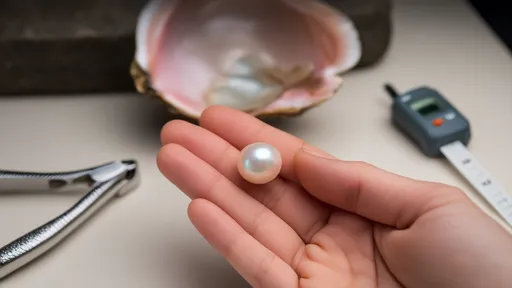
However, to dismiss it as mere entertainment would be to overlook its sophisticated commercial engine. The business model is direct and effective. Viewers purchase specific oysters or mussels from the streamer’s online shop before or during the broadcast. They then watch as their chosen mollusk is opened on live camera. The pearl inside is immediately processed, measured, and shipped to them. This creates an unparalleled sense of ownership and transparency; the customer sees the entire journey of their product, from a live animal to a polished gem in a box destined for their doorstep. This level of traceability is something traditional jewelry retailers simply cannot offer.
This model cleverly subverts traditional jewelry sales. The high-markup, opaque world of pearl retail, often confined to glass cases in brightly lit stores, is replaced by a seemingly authentic and transparent process. The streamer becomes a trusted guide rather than a distant salesperson. They educate viewers on pearl types—Akoya, Tahitian, Freshwater—and their values, building a community of informed enthusiasts. This educational aspect fosters trust, which is the currency of modern e-commerce. The purchase feels less like a transaction and more like participating in an informed hunt, with the streamer as an expert partner.
The economic implications are significant. For pearl farmers and sellers, live-streaming opens up a massive, global customer base without the need for expensive brick-and-mortar retail partnerships. It allows them to sell lower-grade pearls that might otherwise be bulk-sold for industrialization, as the entertainment value justifies their price. For the consumer, it offers the allure of potentially acquiring a valuable gem at a fraction of its presumed retail cost, though the reality of the odds is part of the gamble. The entire value chain is compressed and made visible, disrupting decades of established distribution networks.
Yet, the model is not without its controversies and questions. Ethical concerns regarding the welfare of the mollusks are often raised, though proponents argue the animals are ultimately sourced from farms for consumption. The environmental cost of shipping individual small items globally is another point of contention. Furthermore, the gamified nature of the purchase can lead to impulsive buying behavior, encouraging multiple purchases in the hope of "winning" a rare pearl, which echoes the mechanics of addictive gaming.
In conclusion, the rise of live-streamed pearl harvesting cannot be neatly categorized. It is a hybrid creature of the digital age, a compelling synthesis of entertainment and commerce. It is entertainment because it masterfully plays on human emotion and curiosity, creating a shared, suspenseful narrative. Simultaneously, it is unequivocally a new sales model, one built on transparency, community trust, and the direct-to-consumer ethos that defines modern e-commerce. It has not replaced traditional jewelry sales, but it has carved out a vibrant, lucrative niche that speaks to a new generation of consumers who value experience and story as much as the product itself. This is not just a trend; it is a telling case study of how the lines between content and commerce will continue to blur in the future.

By /Aug 27, 2025

By /Aug 27, 2025

By /Aug 27, 2025

By /Aug 27, 2025

By /Aug 27, 2025

By /Aug 27, 2025

By /Aug 27, 2025

By /Aug 27, 2025

By /Aug 27, 2025
By /Aug 27, 2025
By /Aug 27, 2025

By /Aug 27, 2025

By /Aug 27, 2025

By /Aug 27, 2025

By /Aug 27, 2025
By /Aug 27, 2025

By /Aug 27, 2025

By /Aug 27, 2025
By /Aug 27, 2025

By /Aug 27, 2025
