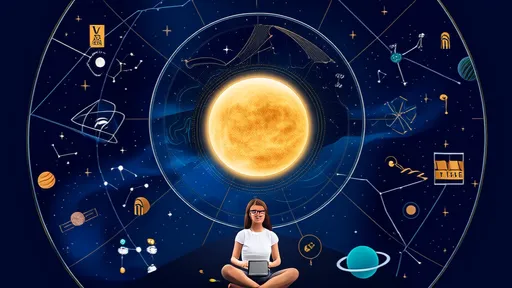
There is a certain magic in looking up at the night sky, a canvas of darkness punctuated by countless points of light. For millennia, these stars have been more than just celestial decorations; they have been guides, storytellers, and silent companions to explorers of all kinds. The theme of this month, Travel and Exploration: Following the Stars to Discover New Worlds, invites us to reconnect with that ancient tradition. It is a call to look beyond the illuminated confines of our daily routines and allow the timeless navigation of the heavens to inspire journeys both external and internal.
Long before the invention of the compass or the GPS, humanity relied on the stars. Polynesian voyagers charted the vast expanse of the Pacific Ocean by reading the subtle patterns of waves, winds, and star paths. They memorized the rise and set points of specific stars, understanding that each one was a fixed beacon in the rotating dome of the night. To sail from Tahiti to Hawaii was to follow the star Hōkūleʻa, known to us as Arcturus. This was not mere travel; it was a profound act of cosmic wayfinding, a dialogue between human courage and the constants of the universe. Their canoes were not just vessels of wood and sail but arks of knowledge, carrying entire cultures across thousands of miles of open sea, guided solely by the stars above and the wisdom passed down through generations.
This stellar guidance extends beyond the physical act of navigation. The stars have always fueled our imagination, pushing the boundaries of what we believe is possible. Every great explorer, from Marco Polo to Neil Armstrong, first embarked on their journey with a look skyward, driven by a burning question of what else is out there. The constellations told stories of gods and heroes, which in turn inspired tales of distant lands and untold riches. This celestial curiosity is the bedrock of exploration. It compels us to map the uncharted, to seek out new cultures, and to understand our place in a vast and wondrous world. To follow the stars is to embrace the very spirit of discovery that has defined our species.
In our modern world, saturated with artificial light and digital maps, we have largely lost our connection to the night sky. The Milky Way, a brilliant river of stars that was once a universal landmark, is now invisible to a third of humanity due to light pollution. Yet, the urge to explore under the stars is experiencing a renaissance. Astro-tourism is burgeoning, with travelers seeking out International Dark Sky Parks and remote destinations like the Atacama Desert in Chile or the Isle of Sark in the English Channel. These places offer a rare gift: the opportunity to stand beneath a truly dark sky and witness the cosmos in its full, awe-inspiring glory. It is here that we can truly appreciate the starlight that has guided wayfinders for centuries.
Following the stars does not always require a passport or a long-haul flight. Discovery is a state of mind. It can begin in your own backyard by simply learning to identify a few key constellations—Orion’s belt, the Big Dipper, the Southern Cross. This simple act re-establishes a personal connection to the universe. It is the first step on a journey. From there, the exploration can take many forms: a road trip to a national park you’ve never visited, a hike on a trail under the light of a full moon, or even delving into the history and cuisine of a different neighborhood in your own city. The stars remind us that adventure is everywhere; we need only the willingness to look for it and step off the well-trodden path.
Perhaps the most profound world we can discover by following the stars is the one within ourselves. There is a unique clarity that comes from solitude under a vast, starry sky. The petty concerns of the day seem to shrink against the infinite. It prompts introspection and big questions about purpose, connection, and our relationship with the planet we call home. This internal exploration is just as critical as any geographical one. It grounds us, provides perspective, and often fuels the compassion and understanding we need to be true global citizens. The stars guide us not just to new places, but to new ways of seeing and being.
So, this month, we encourage you to accept the invitation. Look up. Find a patch of darkness and let your eyes adjust. Trace the lines of the constellations that have watched over explorers, poets, and dreamers since the dawn of time. Let that starlight be your guide. Whether it leads you to a distant country, a hidden local gem, or a deeper understanding of your own place in the cosmos, you will be participating in the oldest human tradition of all: the unending, star-led quest to discover new worlds.

By /Sep 4, 2025

By /Sep 4, 2025

By /Sep 4, 2025

By /Sep 4, 2025

By /Sep 4, 2025

By /Sep 4, 2025

By /Sep 4, 2025

By /Sep 4, 2025
By /Sep 4, 2025

By /Sep 4, 2025

By /Sep 4, 2025
By /Sep 4, 2025
By /Sep 4, 2025
By /Sep 4, 2025

By /Sep 4, 2025
By /Sep 4, 2025
By /Sep 4, 2025
By /Sep 4, 2025

By /Sep 4, 2025
By /Sep 4, 2025
